Electronic payment of Earnest Money Deposit
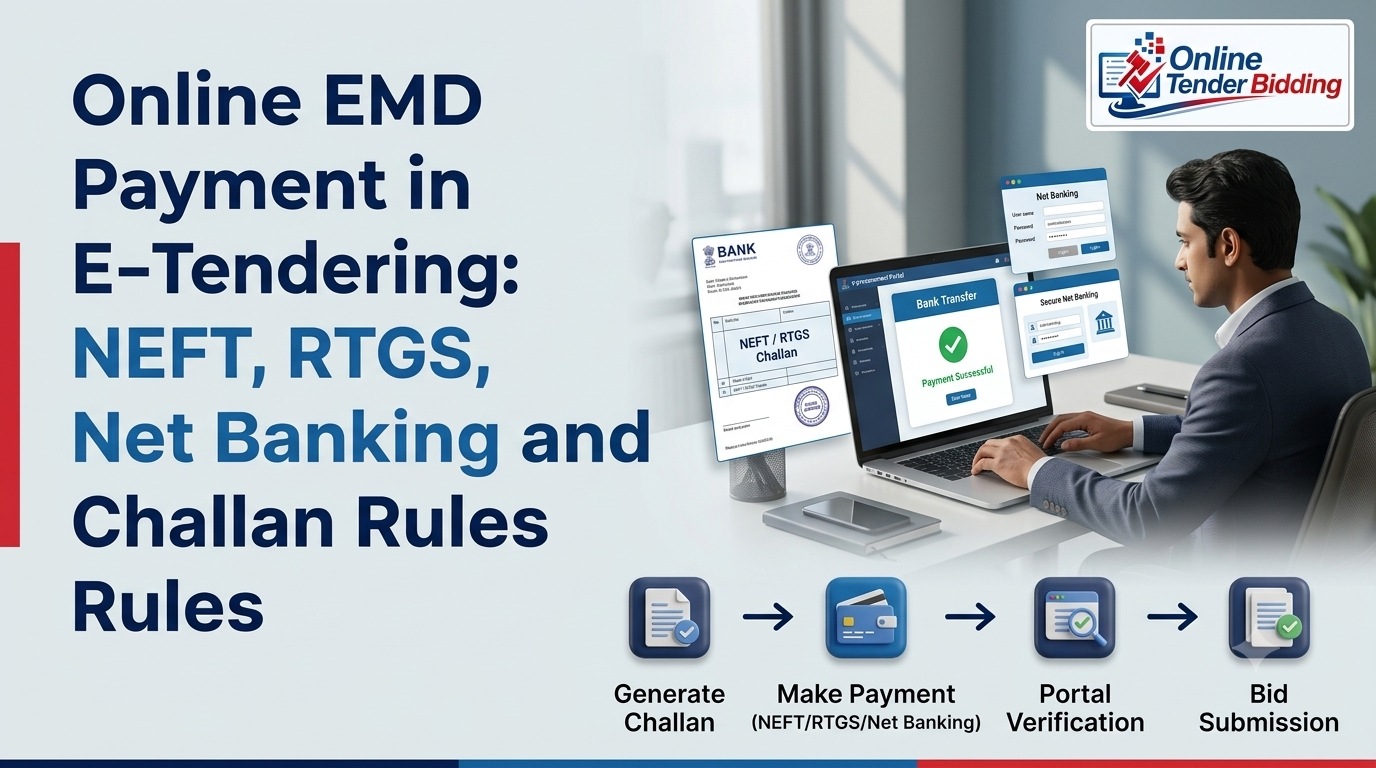
Alongside physical tenders which utilise Demand Drafts and/or Bank Guarantees, e-procurement portals have electronic validation of payments. Only upon successful payment can a bidder then view the final tender screen for bid submission.
Whilst many bidders fail to meet tender dates for reasons other than documentation, payment can sometimes take longer than anticipated to clear or can become lodged in a ‘pending’ state. Recognising the operation of e-payment gateways is key to ensuring timely and trouble free EMD payment and refund.
Valid online EMD payment options, NEFT/net banking and refund procedures are explained below, together with post-evaluation EMD handling.
Online EMD Payment Process
On logging on to e-procurement portals including CPPP (eProcure), state NICs and PSU tender sites, the EMD and tender payment section is just prior to encryption of a tenderer’s technical and financial data packets.
Rather than requiring bank manual validation, a portal is linked to an embedded payment gateway (such as SBI ePay, ICICI, Axis or state treasuries etc). On confirmation that a bank has received a tenderers payment into a portal common fund account, the portal then automatically confirms the payment (Paid/Success) and allows the bidder to progress to bid finalisation.
Valid Online EMD Payment Options
Alongside online uploading of EMD exemption documentation, most Indian e-procurement portals accept Internet (net) banking and both NEFT and RTGS electronic fund transfers.
Payment Option Appropriate For Payment Timeframe Portal Specific Requirement
Internet Banking (Net Banking) Low to medium EMD values within company net banking limits Instant or within a few minutes Browser must remain open for auto re-direction back to the portal
NEFT (National Electronic Funds Transfer) Moderate EMD values where net-banking limits are exceeded Payments are batch processed (generally between 30 minutes and 3 hours on banking days) Portal specific NEFT/RTGS Challan should be produced and funds transferred to a precise virtual account number
RTGS (Real Time Gross Settlement) High EMD values (≥ ₹2 lakh) Almost instantaneous during RTGS banking hours Exact beneficiary details are required from the portal’s Challan. Transfers from non-listed accounts frequently fail.
NEFT/RTGS Challan Creation & Payment Guidance
As high value tenders commonly surpass corporate net-banking limits, NEFT and/or RTGS Challans are usually employed. As every tender and tenderer ID is allocated its own virtual account number, it is crucial that the guidelines for creating a Challan are strictly adhered to:
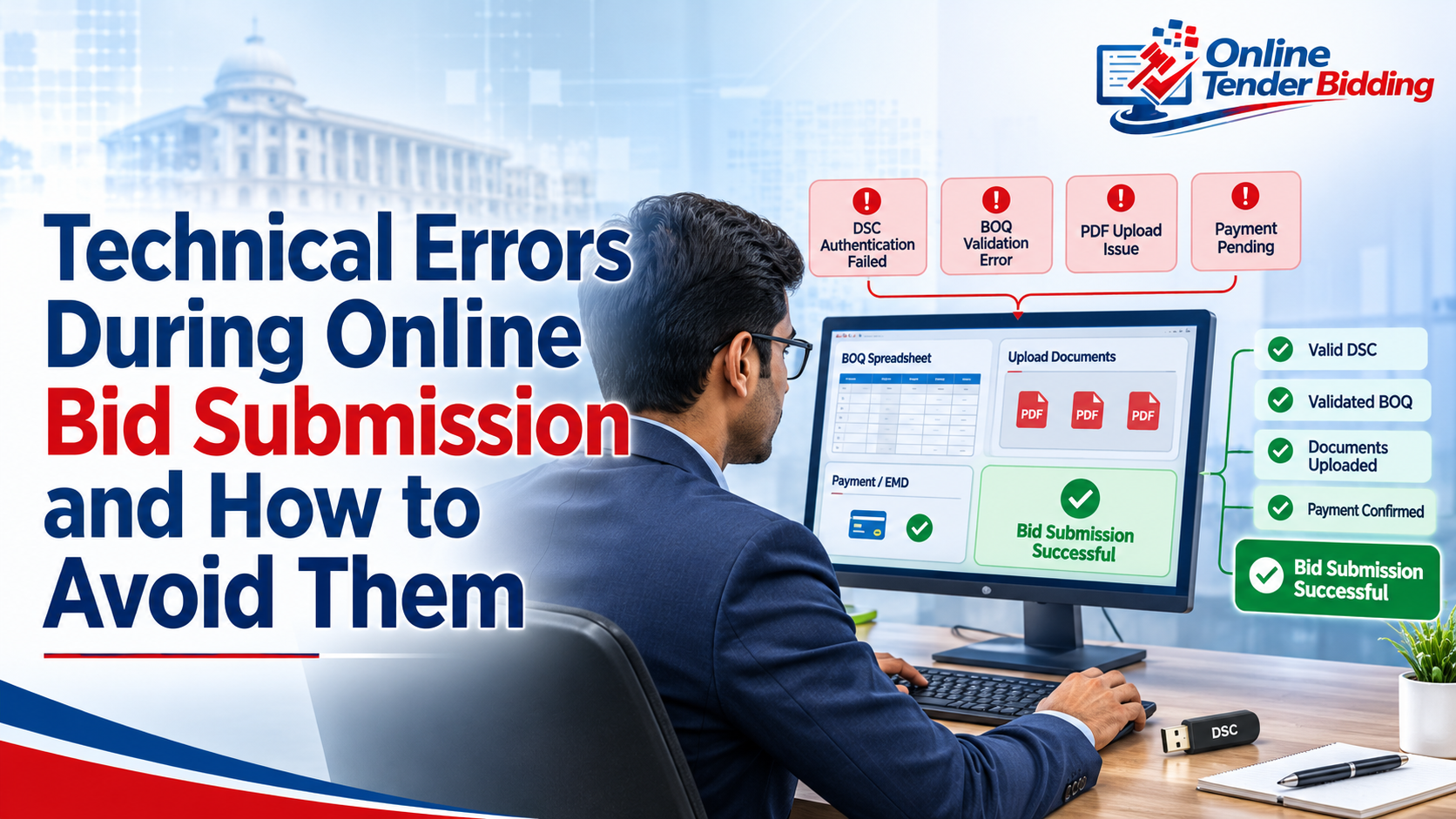
Should there be payment or re-direction issues when uploading your tender, further information on rectifying these can be found in Technical Errors Associated with Online Tender Submission and How To Avoid Them.
Online Claim of EMD Exemption (MSME/Udyam and Startups)
Where a Notice Inviting Tender (NIT) allows MSEs, DPIIT recognised startups or NSIC registered units to claim EMD exemption, there is no need to make any online payment.
To correctly claim EMD exemption on a portal:
• Confirm ‘Yes’ to the ‘EMD Exemption Allowed?’ question on the tender payment screen. Do not create and make payment via a Challan.
• Upload current Udyam Registration Certificate (or relevant exemption evidence relating to the particular goods or service type being tendered for).
• Where specified within the NIT checklist, also include your EMD exemption evidence in your tender technical data packet.
Post Evaluation Electronic EMD Refund Procedure
One considerable benefit of electronically paying EMD is that refunds are automatically handled in a paperless manner. There is therefore no necessity to visit government offices in order to collect a paper Demand Draft.
Unsuccessful Tenderers
On publication of a procuring body’s technical evaluation outcome (for those who were technically ineligible) or on award of a contract to an L1 tenderer (for those who were financially unsuccessful), the portal will automatically refund an unsuccessful tenderers EMD to their original bank account. This will generally occur within 7-15 working days.
Successful (L1) Tenderer
Until a victorious contractor has provided the necessary Performance Bank Guarantee (PBG)/Security Deposit and signed a formal contract, the electronic EMD continues to be retained. Following validation, this EMD is either refunded to the tenderers original account or offset in accordance with security conditions detailed in the tender.
Typical Causes of Online EMD Payment Delay
Premature Browser Closure
Exiting the payment screen before completion of entry of a tenderer’s bank OTP, prevents proper communication between the bank payment gateway and the portal. Consequently, payment will not be validated.
Old Challan Details Employed
As each tender carries its own unique virtual account number, beneficiary information from previous tenders should never be used. This will cause payment to either fail or be incorrectly directed.
Overlooking Corporate Net Banking Limits
Often, a tenderer only discovers their company’s net-banking limit on the last day. By this stage, however, banks may well already be shut and so a last minute decision is made to undertake a NEFT transfer – but this can be problematic.
Summary
Provided suitable planning is undertaken and the correct net-banking option is selected, online EMD payment is uncomplicated. Ascertain your company’s net-banking limit, produce a new NEFT or RTGS Challan and make payment at least one day before tender deadline. Retain evidence of payment along with final bid confirmation.
To discover how EMD percentages recalculated according to an estimated tender value, please refer to How to Calculate EMD in Tenders.